pubX on Signal & Noise: Agentic Trading and the Future of Media
megan.topaz
25 August 2026
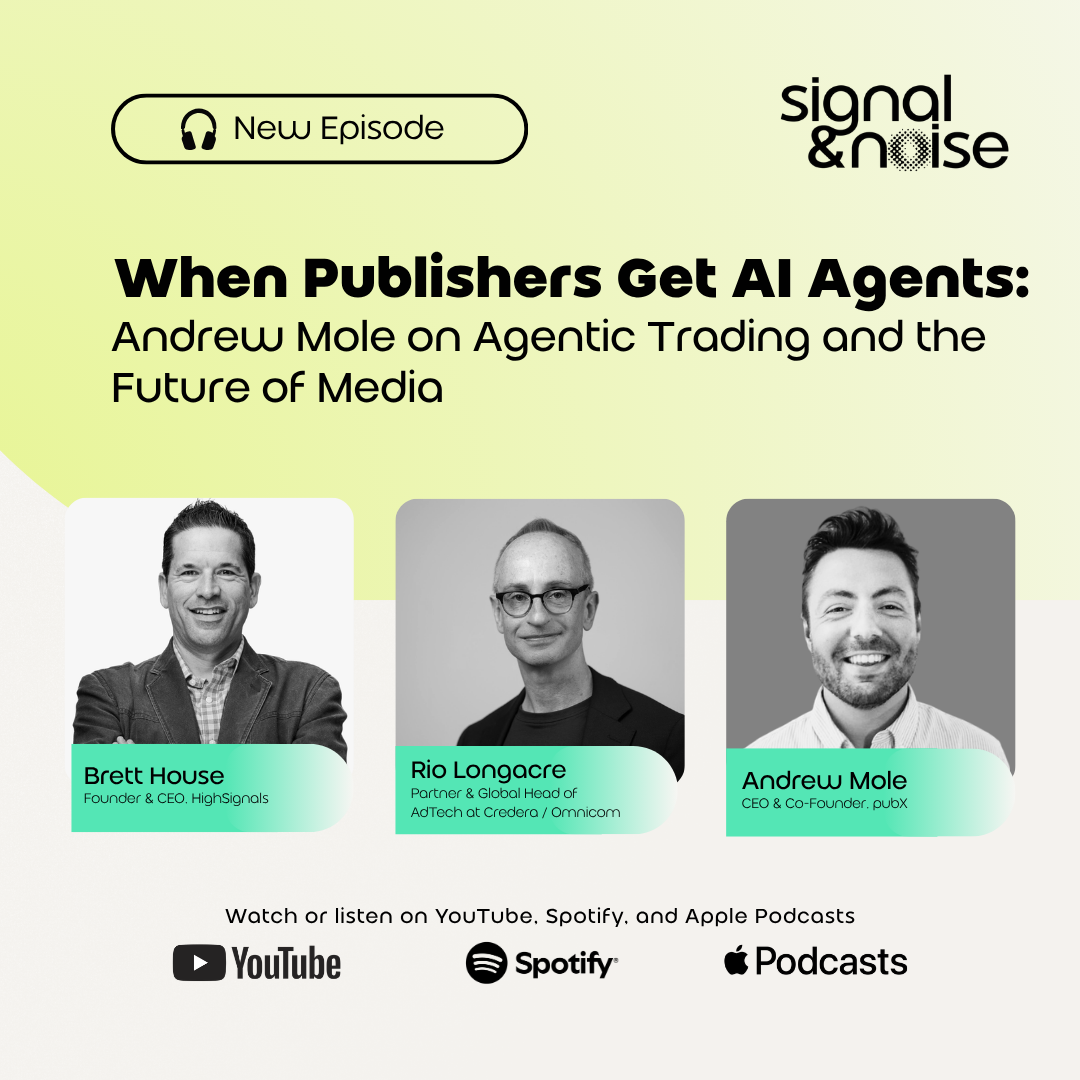
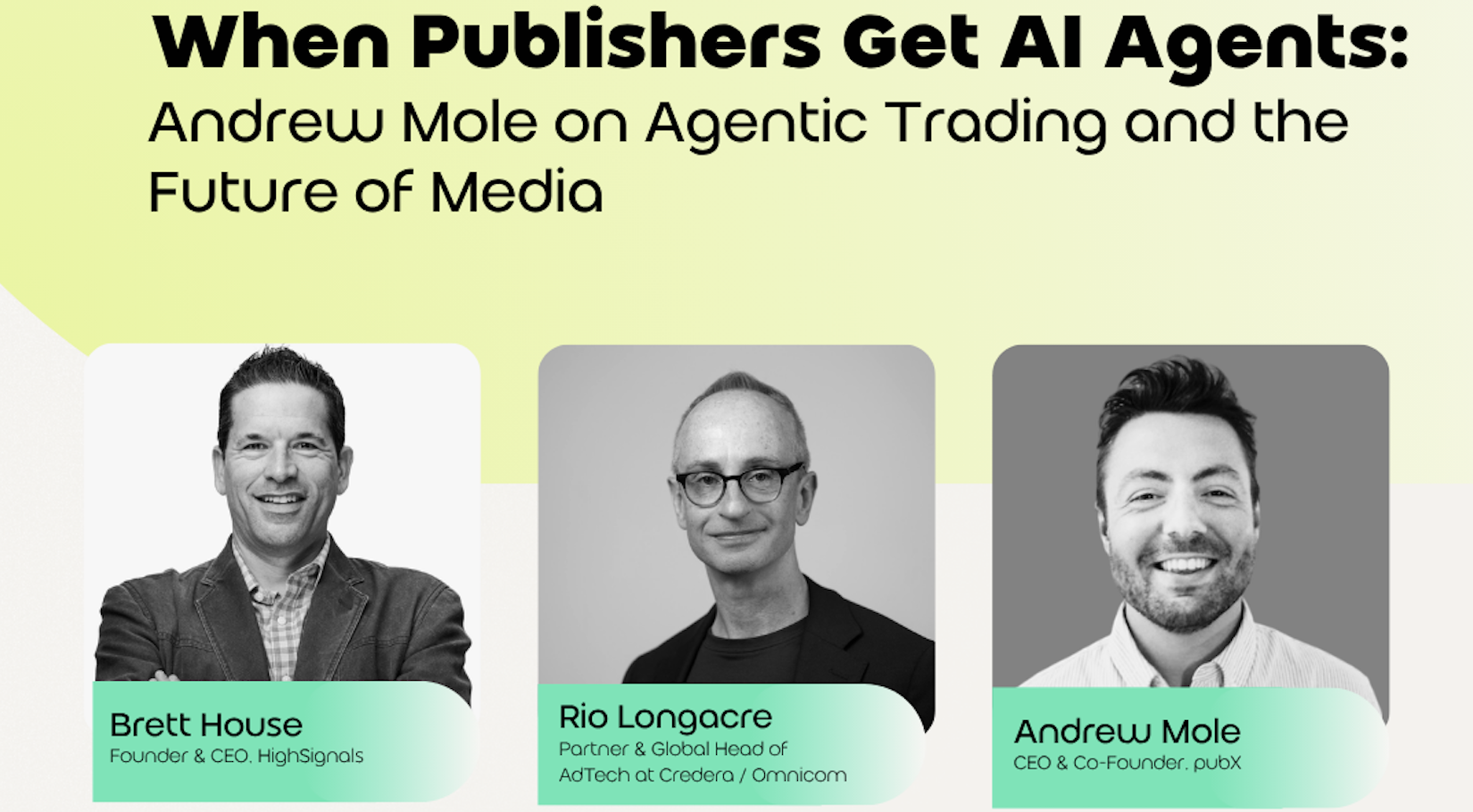
Programmatic advertising automated the transaction. Does AI now automate the negotiation? That was the question at the centre of the latest episode of Signal & Noise, where pubX Founder & CEO Andrew Mole joined hosts Brett House and Rio Longacre for a wide-ranging conversation on agentic trading, publisher monetisation, and what happens now that AI agents are starting to represent both sides of the media transaction.
Why does this stack even exist?
The conversation opened with a provocation. Much of today’s programmatic infrastructure — DSPs, SSPs, ad servers, the layers in between — exists to solve a fundamentally human problem: managing complexity at a scale no person can hold in their head. Agents don’t necessarily share that constraint, which is what makes the underlying question so sharp: if the industry were designing digital advertising from scratch today, would it look anything like it does now?
Publishers, not just plumbing
That question matters because of who it affects first. If agents are going to hold the complexity instead of people, the thing worth protecting is who those agents actually work for. Agentic trading only creates value if publishers stay in control of how their inventory is packaged, priced and sold — not simply routed through another layer that optimises around them. That’s the same principle pubX has built on for five years: publishers keep the trust and the control, agents handle the scale.
Two futures for the supply chain
That question of control plays out differently depending on how the supply chain itself evolves. The conversation mapped two possible paths forward. In one, agents sit on top of today’s infrastructure — DSPs, SSPs, OpenRTB — orchestrating rather than replacing it. In the other, buyer and seller agents communicate directly, and large parts of the traditional supply chain become unnecessary. Publishers and advertisers have a real economic incentive to move toward the second path; the pressure lands hardest on intermediaries whose main job is passing a transaction through, unchanged, for a fee.
The pubX view
pubX is built for that second future: agents negotiating directly on both sides of the transaction, rather than adding one more layer to the existing chain. Agentic trading isn’t a rebrand of programmatic — it’s a genuine shift in who does the negotiating and who captures the value. pubX has spent five years earning that position from the publisher’s side up — and it’s what our platform is built to protect as negotiation itself shifts to agents.
Across the industry, the direction is clear even if most of the infrastructure is still catching up. pubX is already in market — agents negotiating live, on both sides of the transaction. The real question for publishers isn’t whether agentic trading is coming. It’s whether they’re represented in the room now that it’s here.
Watch the full episode below.
🎧 Or listen here >
Spotify → https://open.spotify.com/episode/118obsbe22BbjLft3XEkvN?si=FTc2VyYsS-G5R9NPKgQ6sg ·
Apple Podcasts → https://podcasts.apple.com/us/podcast/signal-noise/id1827975569?i=1000785537674
pubX on Signal & Noise: Agentic Trading and the Future of Media